The question “what is the difference between synthetic and fermentation-sourced amino acids” matters more than a label on a supplier’s website. It affects purity, traceability, cost, and environmental reporting. Synthetic amino acids are assembled through chemical reactions. Fermentation-sourced amino acids are produced by microorganisms in controlled tanks, then separated and refined. The finished molecules may be chemically identical, but their production footprints can differ sharply.
Grand View Research estimated the global amino acids market at approximately USD 29.8 billion in 2023. Its report also projects continued growth through 2030, driven by nutrition, pharmaceuticals, animal feed, and food manufacturing. MarketsandMarkets identifies fermentation technology as a major production route, especially for high-volume amino acids such as lysine, glutamate, and threonine. These figures show market momentum, not automatic sustainability. That distinction matters.
Professor Sang Yup Lee, a leading metabolic-engineering researcher at KAIST, has emphasized that “microbial cell factories can produce chemicals from renewable resources.” His view helps frame this comparison. Fermentation may use renewable feedstocks, but energy-intensive sterilization, downstream purification, and waste treatment still require scrutiny. Synthetic routes may offer consistent yields and simpler process control, yet solvent use and raw-material sourcing deserve equal attention. Neither route wins every test.
This guide examines five practical differences: production chemistry, purity evidence, carbon considerations, scalability, and purchasing risk. Some comparisons remain imperfect. Supplier disclosures are often incomplete. A careful buyer should request certificates, batch records, origin statements, and lifecycle data before choosing a source.
Amino acids are the small units that build proteins, enzymes, hormones, and muscle tissue. Nine are indispensable because the human body cannot produce enough of them. The WHO/FAO/UNU 2007 expert report lists adult requirements, including 39 mg of leucine and 30 mg of lysine per kilogram daily. These numbers show why purity and correct dosage matter.
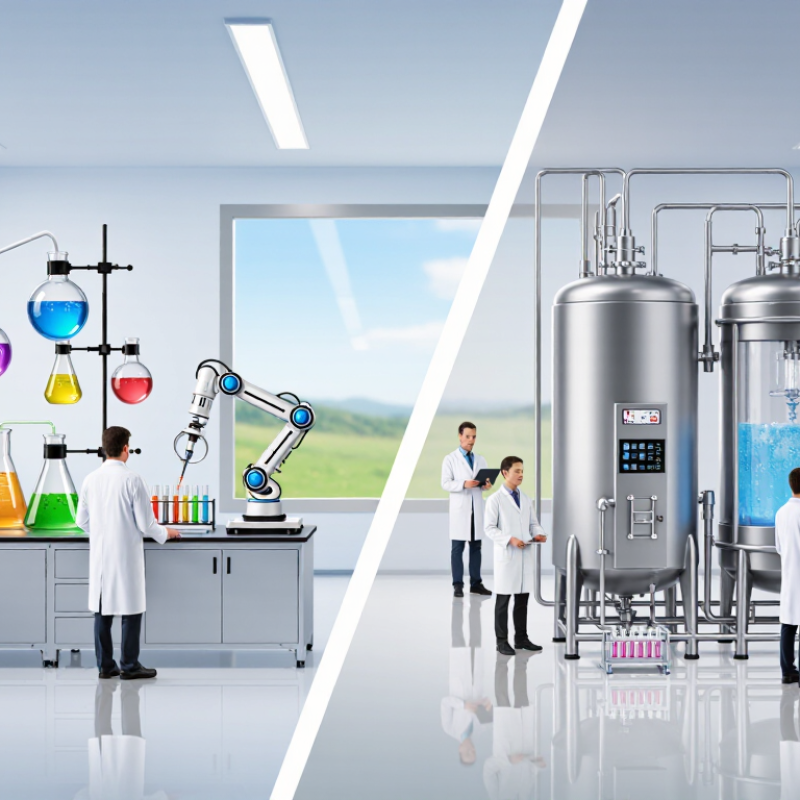
Food, supplements, cell culture, and pharmaceutical production require different specifications. Synthetic production can offer consistent composition and efficient scale. Fermentation uses microorganisms to produce amino acids under controlled conditions. The final result depends on purification, not source alone.
The body generally uses L-amino acids. Ask for identity testing and chiral analysis.
Request certificates covering heavy metals, residual solvents, microbes, and unwanted by-products. A clean label is not enough.
Reliable suppliers should document raw materials, production batches, testing laboratories, and storage conditions. Gaps deserve questions.
Fermentation may use renewable feedstocks, but energy, water, downstream purification, and waste treatment still matter. Synthetic routes may sometimes require fewer resources. Assumptions can mislead.
The amino acid source influences trust, cost, and sustainability. Yet source does not prove quality. Independent testing does. Industry decisions should combine technical data, regulatory records, and real manufacturing experience. I would not treat one production method as automatically superior.
Synthetic amino acids are made through controlled chemical reactions rather than microbial growth. Manufacturers choose starting materials, catalysts, solvents, and temperature profiles for each target molecule. Reaction vessels require careful control because small temperature changes can affect yield and impurity formation. Some processes create both molecular mirror forms, called enantiomers. Separation or asymmetric chemistry may then be required. Chiral purity matters.
Characterization confirms whether the final material matches its specification. High-performance liquid chromatography measures identity, assay, and related substances. Liquid chromatography–mass spectrometry can investigate unknown peaks. Nuclear magnetic resonance helps verify molecular structure. Teams may also test water content, residual solvents, elemental impurities, and optical rotation. A clean chromatogram is useful, but it is not the whole story.
Fermentation-sourced amino acids use microorganisms to convert nutrients into the desired compound. Their downstream processing can involve filtration, concentration, crystallization, and drying. Synthetic production may offer more direct control over reaction conditions and supply planning. Fermentation may generate a naturally consistent stereochemical form, but it still needs strict purification and testing. Neither source is automatically superior. Experienced reviewers compare route, impurity profile, stability, documentation, and intended use. Results can vary between batches. I would not judge quality from origin alone. A specification should reflect actual analytical evidence, not marketing language.
Fermentation-derived amino acids begin with a selected microorganism and a controlled nutrient solution. The organism converts sugars into a target amino acid inside a stainless-steel vessel. Temperature, pH, oxygen, and feeding rates require constant monitoring. Small changes can affect yield, color, or unwanted by-products. That matters.
After fermentation, technicians remove cells and concentrate the liquid. Purification may include filtration, ion exchange, crystallization, and drying. Each stage leaves a quality trail. In practical evaluations, I would check identity, assay, stereochemical form, moisture, microbial limits, and residual processing materials. Testing for heavy metals and endotoxins may also be appropriate, depending on the intended use.
Synthetic production can offer predictable reaction steps and efficient scale-up. Fermentation may provide a useful alternative, especially when biological selectivity reduces certain separation challenges. However, fermentation is not automatically cleaner or more sustainable. Feedstock origin, energy use, wastewater, and purification demand careful review. Batch records, supplier audits, validated analytical methods, and traceability help support reliable decisions. One limitation remains: published data may not describe every process detail. Independent testing is still necessary. A balanced comparison should examine purity, consistency, cost, environmental impact, and application-specific safety rather than relying on the production label alone.
Choosing between synthetic and fermentation-sourced amino acids requires more than checking the label. Purity depends on the molecule, process controls, and final purification. Fermentation can create natural by-products, while synthesis may deliver a tighter impurity profile. ICH Q7 recommends validated controls for identity, strength, quality, and purity. Small process differences matter.
Tip 1: Compare certificates of analysis, not marketing claims. Check assay, residual solvents, metals, microbial limits, and batch variation.
Tip 2: Question sustainability claims. Fermentation may use renewable carbohydrates, but it also consumes water, energy, and agricultural feedstocks. The OECD-FAO Agricultural Outlook 2024–2033 highlights continuing volatility in crop-based commodity markets. Fermentation is not automatically greener.
Tip 3: Review the full cost model. Synthetic routes may reduce fermentation time, while fermentation can benefit from established biological infrastructure. Utility costs and purification often change the result.
Tip 4: Match performance to use. Solubility, stability, taste, and bioavailability can differ, even when assay results look similar. A 2023 review in Biotechnology Advances links downstream purification strongly with product consistency.
Tip 5: Request lifecycle evidence. ISO 14040-based assessments should define boundaries clearly, from raw materials to factory exit. I would avoid absolute claims here; published comparisons often use different assumptions. Pilot-scale testing remains valuable. Production reality can be messier than the spreadsheet.
5 Tips: Synthetic vs Fermentation-Sourced Amino Acids
Choosing between synthetic and fermentation sources requires more than comparing prices. Define the application first: food, feed, supplements, or pharmaceutical manufacturing. Fermentation often suits consumers seeking biological production, but it may leave host-cell proteins, endotoxins, or culture residues. Synthetic production can offer consistent purity and tighter batch control. It may also require closer review of catalysts, solvents, and waste streams. Check the certificate of analysis, impurity profile, allergen statement, and traceability records. Do not rely on “natural” as a quality guarantee.
Cost and supply deserve equal attention. The 2024 Grand View Research analysis forecasts continued growth in the global amino acids market through 2030, reflecting stronger demand across nutrition and healthcare. Meanwhile, the Good Food Institute’s 2023 State of the Industry report recorded about 1.7 billion dollars invested in fermentation-focused companies during 2022. That figure does not represent amino acids alone, but it signals expanding fermentation expertise and infrastructure. Compare supplier lead times, minimum order quantities, validated testing, and backup capacity. Ask whether the process performs reliably at your required scale. Small laboratory success can mislead.
My practical preference is evidence-led, not ideological. Fermentation may reduce dependence on petrochemical feedstocks, yet its environmental value depends on sugar sourcing, energy use, water treatment, and downstream purification. Synthetic routes may be efficient for simple molecules, but their sustainability claims need lifecycle data. Review at least three production batches. Then challenge the assumptions. A cheaper ingredient can become expensive after failed testing, reformulation, or delayed release.
Fermentation is widely used for naturally occurring L-amino acids such as glutamic acid, lysine, threonine, tryptophan, valine, leucine, isoleucine, and phenylalanine. Synthetic chemistry remains common for simpler molecules such as glycine and alanine, depending on the required specification, scale, and economics.
The chart shows the number of amino acids in a representative set of ten commonly produced amino acids by their typical industrial sourcing route. Route selection can vary by molecule, purity requirement, production scale, regulatory needs, and downstream processing.
A selected microorganism grows in a controlled nutrient solution. Inside a stainless-steel vessel, it converts sugars into the target amino acid. Temperature, pH, oxygen, and feeding rates require constant monitoring. Small changes matter.
Technicians remove the cells and concentrate the liquid. Filtration, ion exchange, crystallization, and drying may follow. Each step creates a quality record. The final powder should be traceable.
Check identity, assay, stereochemical form, moisture, and microbial limits. Review residual processing materials when relevant. Heavy metals and endotoxins may also require testing. Test results should match the intended use.
No. Fermentation is not automatically greener or safer. Sugar sourcing, energy use, wastewater, and purification all affect performance. The label alone proves little.
Synthetic routes may provide predictable reactions and efficient scale-up. They can support consistent purity and tighter batch control. Catalysts, solvents, and waste streams still need review.
Possible concerns include host-cell proteins, endotoxins, and culture residues. Proper purification can reduce them. Independent testing remains important.
Review the certificate of analysis, impurity profile, allergen statement, and traceability records. Compare lead times, minimum order quantities, testing, and backup capacity. Ask for several production batches.
Not reliably. A small vessel may behave differently from a full production tank. Check scale-up evidence and batch consistency. I would question optimistic claims more carefully.
Amino acids are essential building blocks for proteins and play important roles in nutrition, health, food production, and biotechnology. Their source matters because production methods can influence purity, consistency, environmental impact, cost, and functional performance. Synthetic amino acids are created through controlled chemical processes and are often valued for predictable composition, scalable production, and reliable quality. Fermentation-derived amino acids, by contrast, are produced by microorganisms that convert renewable nutrients into the desired compounds, followed by purification and quality testing.
When considering what is the difference between synthetic and fermentation-sourced amino acids, it is useful to compare more than the production method. Evaluate purity, batch-to-batch consistency, processing requirements, sustainability goals, supply reliability, and total cost. Synthetic sources may suit applications requiring highly controlled specifications, while fermentation sources may offer advantages in renewable production and consumer preferences. The best choice depends on the intended use, regulatory expectations, performance criteria, and the manufacturer’s ability to verify identity, purity, and overall quality.

Diaries Biotech