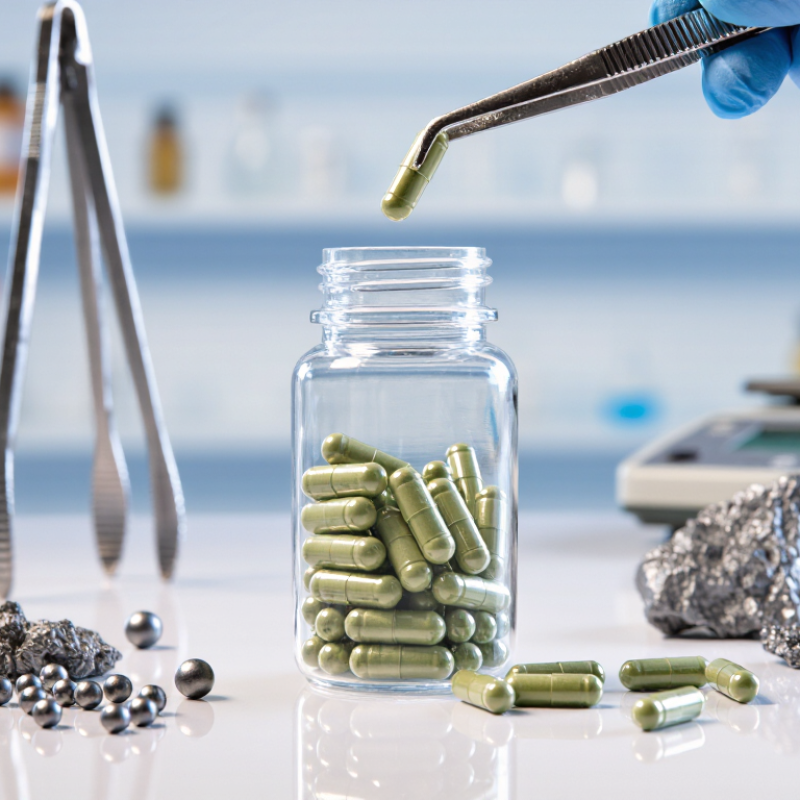
A bottle of herbal capsules may look simple, yet its contents can reflect soil, water, and processing conditions. Heavy metals such as lead, cadmium, arsenic, and mercury can enter plants through their growing environment. Their presence is not always visible, and a clean label cannot confirm that a product meets suitable safety standards. That makes careful checking important.
Consumers often ask, “what is the safety limit for heavy metals in herbal supplements?” There is no single universal limit for every metal, product, or market. Requirements can vary by country and may depend on the amount consumed, the supplement’s form, and the relevant testing method. A useful starting point is to check current guidance from health authorities and ask manufacturers for recent, product-specific laboratory results. Look for the metals tested, the reported amounts, and the laboratory’s qualifications. Details matter.
This guide explains how to read those results and assess a supplement more carefully. It also distinguishes a certificate of analysis from a broad marketing claim, because they are not the same thing. A test can reduce uncertainty, but it cannot make every risk disappear. Testing methods and reporting limits deserve a second look, too. When information is missing or unclear, contacting the manufacturer or a qualified health professional is a sensible next step. Small print can matter.
Before checking heavy metals, define the product precisely. Record the plant species, plant part, extract ratio, dosage form, and serving size. A capsule, tea bag, and concentrated tincture cannot share one exposure calculation.
The maximum daily serving matters most. USP General Chapter <2232> lists daily exposure limits for dietary supplements, including 5 micrograms of lead, 15 micrograms of inorganic arsenic, and 5 micrograms of cadmium per day. These are exposure-based values, not automatic legal limits for every country. WHO guidance also stresses that contamination can vary between plant materials and growing regions.
Use this calculation: daily exposure equals metal concentration multiplied by daily product intake. For example, if a consumer takes 3 grams daily, a 5-microgram lead limit allows approximately 1.67 milligrams per kilogram in the finished product. The number changes when the serving changes. Small labels can hide large differences.
Request an accredited laboratory report using validated ICP-MS testing. Check whether results cover lead, cadmium, arsenic, and mercury, and confirm arsenic is reported as inorganic arsenic when required. EFSA has noted that exposure assessment depends on dose, body weight, and contaminant form.
I would not rely on a single batch forever. Plants are inconsistent, and one test may create false confidence. Recheck after supplier changes, seasonal harvests, or formula adjustments.
Heavy metal screening should connect laboratory results with actual daily intake. USP <2232> sets a daily exposure limit of 5 micrograms for lead and 5 micrograms for cadmium in dietary supplements. These values describe total daily exposure, not merely the concentration in one capsule.
Start with the laboratory result, serving size, and servings per day. For example, a supplement containing 0.25 micrograms of lead per capsule provides 0.5 micrograms daily at two capsules. That remains below the 5-microgram USP limit. Always check the units. Milligrams and micrograms are not interchangeable.
Small errors matter.
A reliable assessment uses representative samples from different batches. The laboratory should use validated elemental analysis, such as ICP-MS, with suitable detection limits and quality controls. Review the certificate carefully: confirm whether results are reported per serving, per gram, or per container. I have seen calculations fail when analysts compared a per-gram result directly with a daily limit. That shortcut can distort risk.
Cadmium deserves equal attention, even when lead results appear low. Soil, processing equipment, and raw-material variability can change elemental levels between harvests. USP <2232> provides a useful reference, but local requirements and product directions may also apply. Keep written calculations, batch records, and laboratory reports together. A second review is worthwhile, because a neat spreadsheet can still contain a quiet unit mistake.
A credible review starts by identifying four target metals: lead, cadmium, inorganic arsenic, and mercury. These contaminants can enter herbs through soil, irrigation water, processing equipment, or storage conditions. Lead may affect the nervous system, while cadmium can accumulate in the kidneys. Inorganic arsenic is more concerning than many organic arsenic forms. Mercury exposure depends on its chemical form and source.
Do not rely on a label alone. Request a batch-specific certificate of analysis from a qualified laboratory. The report should list each metal separately, not only “total heavy metals.” For arsenic, confirm that inorganic arsenic was measured. For mercury, ask whether the method detects the relevant mercury species. Techniques such as ICP-MS can provide sensitive measurements, but the laboratory still needs validated procedures and suitable detection limits. Labels can mislead.
Check the sample identity, production lot, test date, and units. Compare results with the limits required in your sales market, because limits can differ by region and serving size. A result below the reporting limit is not the same as zero. It means the substance was not quantified under that test’s conditions. I would also question results that appear identical across many batches. That pattern may signal weak sampling or copied paperwork. Even a well-designed test has limits, so retaining samples and repeating analysis after unusual results is sensible.
When reviewing a laboratory report for herbal supplements, check that the sample tested matches the product and batch you have. A result from another batch may not describe the bottle in your hand. Look for ICP-MS, a method that measures elements such as lead, arsenic, cadmium, and mercury at low concentrations. The method name matters, but it is not the whole story.
Read the detection limit for each metal. This is the lowest level the laboratory can reliably detect under its stated conditions. A result marked “not detected” does not mean zero; the metal may be present below that limit. Check that the limit is lower than the relevant safety threshold used for the product and serving size. Units matter. A report may list micrograms per kilogram, while a consumer-facing limit may use micrograms per daily serving. Ask how the lab converted between them.
Look for the laboratory’s name, report date, sample identification, and quality-control notes, such as blanks or recovery checks. These details help show how the test was performed. Still, paperwork can be hard to interpret. I might miss a unit conversion, too. If the report omits detection limits, gives unclear units, or covers only one metal, ask the manufacturer or a qualified professional for clarification before relying on its claims.
A batch report is useful only when its numbers match the serving you plan to take. Check the product name, lot number, test date, and serving size against the container. Then look for results for lead, cadmium, arsenic, and mercury, reported in micrograms per gram or milligrams per kilogram. Units matter. A tiny-looking number can still mean a meaningful daily intake when several capsules are taken.
Compare daily exposure, not just concentration. USP General Chapter <2232> sets dietary-supplement exposure limits of 5 micrograms per day for lead and cadmium, and 15 micrograms per day for inorganic arsenic and total mercury. These are technical reference values, not universal limits for every product or jurisdiction. For example, multiply the reported concentration by the grams consumed daily. Ask whether arsenic was measured as inorganic arsenic; total arsenic alone does not answer that question. Small detail. Big difference.
Look for a laboratory report identifying the analytical method, ideally a validated method such as ICP-MS, and the laboratory’s accreditation scope. USP General Chapter <233> describes elemental-impurity procedures using techniques including ICP-MS. A certificate saying “pass” without numeric results is hard to evaluate. Contact the manufacturer or laboratory for the full report if needed. I would not treat a clean-looking label as evidence of a clean batch; reports can be incomplete, and testing does not guarantee zero contamination.
Compare a batch’s laboratory results with the limits that apply to the product, serving size, and jurisdiction. The USP <2232> limits below are expressed as maximum daily exposure; they are not universal legal limits.
| Contaminant | USP <2232> maximum daily exposure | Illustrative batch result | Illustrative exposure at 2 g/day | Example comparison |
|---|---|---|---|---|
| Arsenic (As) | 15 µg/day | 0.40 mg/kg | 0.80 µg/day | Below the cited limit |
| Cadmium (Cd) | 5 µg/day | 0.20 mg/kg | 0.40 µg/day | Below the cited limit |
| Lead (Pb) | 10 µg/day | 0.30 mg/kg | 0.60 µg/day | Below the cited limit |
| Mercury (Hg) | 15 µg/day | 0.05 mg/kg | 0.10 µg/day | Below the cited limit |
Important: The batch results above are hypothetical examples for demonstrating the comparison method; they are not measurements from an actual product or laboratory report. For a result in mg/kg, calculate daily exposure as: result (mg/kg) × daily serving (g) = exposure (µg/day).
Confirm the current applicable standard, product category, serving instructions, analytical method, and laboratory report for the specific batch. Arsenic limits may depend on the form measured, and total-metal results do not by themselves identify chemical form. A result below one cited limit does not establish compliance with every jurisdiction’s requirements.
It refers to total daily exposure, not the amount in one capsule. Check the product’s serving directions.
Multiply the amount per capsule by capsules taken each day. For example, 0.25 micrograms per capsule at two capsules equals 0.5 micrograms daily.
Reports may show micrograms per gram or per kilogram, while safety limits use daily intake. A mistaken conversion can distort the comparison.
It should identify the tested product and batch, report date, sample details, tested metals, and quality-control information.
No. The level may be below the laboratory’s detection limit. That limit needs checking.
It should be lower than the relevant safety threshold for the product and serving size. Otherwise, the result may not answer the safety question clearly.
Not always. Element levels can vary between batches, so representative samples from different batches give a clearer picture.
They are separate metals, and cadmium levels can also vary with soil, processing equipment, and raw materials.
Ask the laboratory, manufacturer, or a qualified professional for clarification. Keep the report and your calculations together. A tidy spreadsheet can still be wrong.
To assess heavy metal safety in herbal supplements, first define the product and its maximum recommended daily serving. The key question is: what is the safety limit for heavy metals in herbal supplements? A meaningful evaluation should compare the total daily elemental exposure from the serving with applicable limits, rather than relying only on the concentration per capsule or gram. As a reference point, USP <2232> identifies daily limits of 5 µg for lead (Pb) and 5 µg for cadmium (Cd), while limits for inorganic arsenic and mercury should be determined according to the relevant standard and product category.
Consumers should review laboratory reports that use ICP-MS testing, confirming that the method can reliably measure the target metals and that the detection limits are sufficiently low. Before purchasing or using a product, verify that batch-specific results are available and that the calculated daily exposure for lead, cadmium, inorganic arsenic, and mercury remains below the applicable limits. This process supports a more informed and careful assessment of herbal supplement quality.

Diaries Biotech