Liposomal encapsulation is attracting attention in modern supplement research. It places selected nutrients inside tiny phospholipid spheres. These spheres resemble some structures found in cell membranes. The goal is practical: protect sensitive compounds and support their journey through digestion.
For readers asking, “what is the benefit of liposomal encapsulation for supplement absorption,” the answer requires careful detail. Liposomes may help shield nutrients from stomach conditions. They may also improve dispersion in digestive fluids. In some cases, this can support greater absorption than a comparable conventional formula. However, results vary by nutrient, liposome size, manufacturing method, and individual health. Better delivery is possible, not guaranteed.
Quality matters greatly. Reliable manufacturers should test particle size, encapsulation efficiency, stability, purity, and ingredient strength. Independent laboratory testing adds useful confidence. Clinical evidence remains uneven across supplements, and laboratory findings do not always predict real-world outcomes. That limitation deserves attention.
A vivid example is vitamin C suspended within a carefully prepared lipid structure, rather than sitting alone in a powder. The difference may affect how the body handles it. Yet the body is complex. One promising formulation may perform differently in another person. Dosage, diet, digestion, and product storage can all influence results. Consumers should examine transparent labels and avoid assuming that “liposomal” automatically means superior. This overview explores the science, potential advantages, practical limits, and quality questions behind liposomal delivery. Some claims still need stronger human research. That is worth remembering.
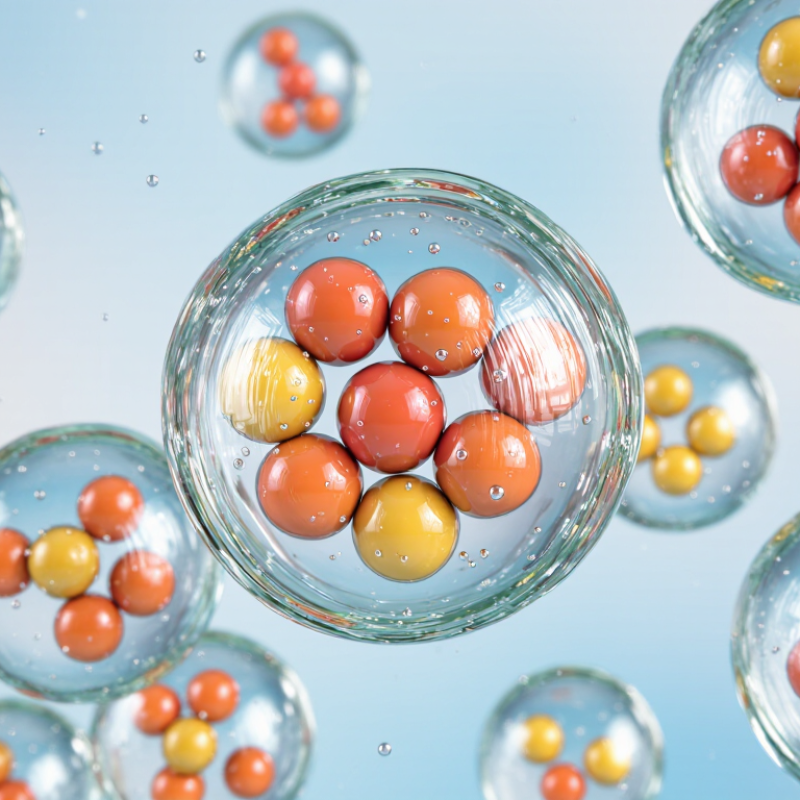
Liposomal encapsulation places an active ingredient inside tiny, spherical lipid vesicles. These vesicles resemble cell membranes. Their structure can hold water-soluble ingredients in the inner core and fat-soluble ingredients within the outer bilayer. This makes delivery more controlled than using the ingredient alone.
The practical benefit is protection. Liposomes may shield sensitive compounds from light, oxygen, stomach conditions, or early breakdown. A 2023 review in Pharmaceutics described liposomes as flexible carriers for improving stability and transport. However, better absorption is not automatic. Particle size, lipid composition, dosage, and manufacturing quality all matter. The difference can be visible: one formula may remain uniform, while another separates after storage. That detail is easy to overlook. The 2024 Grand View Research report estimated the global liposome drug-delivery market at several billion U.S. dollars, reflecting growing industry interest, not proof that every liposomal product performs better.
Tips: Check whether the formulation provides particle-size, stability, and absorption data. Look for independent testing and storage instructions. A “liposomal” label alone proves very little. Also, compare the actual ingredient dose, not only the delivery system. Evidence remains uneven for many wellness applications. I would treat dramatic absorption claims carefully, especially when human studies are limited.
A liposome is a tiny sphere made from phospholipids, the same family of fats found in cell membranes. Its outer layer can surround active ingredients and create a protective carrier. Water-soluble compounds may sit inside the watery core, while fat-soluble compounds can rest within the lipid layer. This structure gives formulators more flexibility.
Delivery begins when liposomes contact body fluids. Their membranes may help shield sensitive ingredients from early breakdown, especially during digestion or storage. Some particles can interact with intestinal mucus and cell membranes, allowing their contents to be released near absorption sites. The process depends on particle size, membrane composition, surface charge, and the ingredient itself. Small details matter.
In practical formulation work, liposomal delivery is useful, but it is not magic. A well-designed carrier may improve stability or bioavailability, yet laboratory performance does not always predict human results. Manufacturing quality also matters. Uneven particle sizes, oxidation, or poor storage can reduce consistency. Research should compare the liposomal form with a suitable non-liposomal form using reliable human data. A stronger delivery system still needs an appropriate dose and a safe ingredient. That distinction matters.
Liposomes are lipid-based vesicles that can carry water-soluble compounds in their aqueous core and fat-soluble compounds within their lipid bilayer. Their size influences circulation, tissue interaction, and cellular uptake.
The chart shows commonly reported diameter ranges for major liposome classes. Smaller vesicles may improve dispersion and cellular interaction, while larger vesicles can provide higher loading capacity. Actual performance depends on lipid composition, surface charge, encapsulated ingredient, and formulation method.
Liposomal encapsulation places an active ingredient inside microscopic lipid bubbles. These bubbles resemble cell membranes. Their structure can shield sensitive compounds from oxygen, light, and digestive conditions. It may also improve water dispersibility for ingredients that normally separate or settle. That matters in real products.
According to Grand View Research’s 2024 liposome drug delivery market report, the global market was valued at roughly US$5 billion in 2023. This growth reflects investment in targeted delivery, improved stability, and controlled release. Peer-reviewed research in Pharmaceutics also describes liposomes as useful carriers for reducing premature ingredient degradation. In practice, particle size, lipid composition, and manufacturing quality strongly influence performance.
The benefits are not automatic. Better absorption is not guaranteed. A poorly designed liposome may leak, aggregate, or release its payload too early. Small particles can also create processing challenges.
Formulators should examine encapsulation efficiency, storage stability, release behavior, and human bioavailability data. Laboratory results may look impressive. Human outcomes can differ.
For consumers, the clearest advantage is delivery support. A stable carrier may help more of an ingredient reach the intended environment. It may also reduce unpleasant taste or irritation for some formulations. However, independent testing remains important. “Liposomal” is not a complete quality standard. The final result depends on the ingredient, dose, carrier design, and evidence behind the product.
What Is the Benefit of Liposomal Encapsulation?
Liposomal encapsulation places active compounds inside microscopic lipid vesicles. This structure may improve dispersion, protect unstable ingredients, and support controlled delivery. A 2023 review in Pharmaceutics reported that many liposomal systems achieve encapsulation efficiencies between 60% and 95%, depending on the compound and process. The benefit is not automatic. A poorly designed vesicle can leak during storage or release its payload too slowly.
Factors That Influence Liposomal Performance
Lipid composition strongly affects membrane strength, fluidity, and release behavior. Particle size matters too. Smaller vesicles often provide better dispersion, but they may require more energy during production. Surface charge influences aggregation, while pH, salt concentration, temperature, and oxygen exposure can change stability. Practical testing should include size distribution, encapsulation efficiency, leakage, and release profiles over time. One attractive laboratory result is not enough.
Industry demand reflects this complexity. Grand View Research’s 2024 market analysis projected strong growth for liposome-based drug delivery through 2030, driven by improved delivery and formulation flexibility. However, market growth does not prove every product performs well. A formulation may pass an early screening test and fail after several weeks at elevated temperature. That uncomfortable gap needs more attention. Manufacturing pressure, container interaction, and repeated freeze-thaw cycles can quietly reduce performance. Careful methods, validated measurements, and transparent reporting remain essential.
| Performance Dimension | How It Influences Liposomal Performance | Typical or Relevant Data | Practical Benefit |
|---|---|---|---|
| Protection of Encapsulated Compounds | The phospholipid bilayer can reduce direct exposure of sensitive compounds to oxygen, light, hydrolysis, and some digestive conditions. | Protection is compound-specific and depends on bilayer composition, pH, oxygen exposure, temperature, and storage time. | May improve chemical stability and help preserve activity before use or absorption. |
| Particle Size | Size affects dispersion, physical stability, tissue distribution, cellular interactions, and clearance behavior. | Many liposomal formulations are designed in the approximately 50–200 nm range, although the appropriate size depends on the intended application. | A controlled size distribution can support more consistent delivery and product performance. |
| Polydispersity Index | The polydispersity index indicates how uniform the particle-size distribution is. | Lower values generally indicate a more uniform dispersion; a value below about 0.20 is often considered relatively narrow for many laboratory liposome preparations, depending on the method and application. | Improves batch-to-batch consistency and makes performance easier to evaluate. |
| Encapsulation Efficiency | Encapsulation efficiency depends on the compound’s water or lipid solubility, lipid composition, preparation method, concentration, and drug-to-lipid ratio. | Hydrophobic compounds commonly associate with the lipid bilayer, while hydrophilic compounds are mainly retained in the aqueous core; reported efficiency can range widely by formulation. | Higher and reproducible loading can reduce free compound and improve delivery efficiency. |
| Zeta Potential and Surface Charge | Surface charge influences electrostatic repulsion between particles, aggregation behavior, interactions with proteins, and biological membranes. | Strongly charged particles may show greater colloidal stability, while near-neutral surfaces may reduce nonspecific interactions; zeta potential alone does not predict total in-use stability. | Helps balance physical stability with desired biological compatibility. |
| Lipid Composition and Phase Transition | Chain length, saturation, cholesterol content, and lipid phase-transition temperature affect membrane rigidity, permeability, leakage, and release rate. | More rigid bilayers generally reduce permeability, whereas more fluid bilayers can support faster release and membrane interaction. | Allows formulation scientists to tune retention, release, and stability for a specific compound. |
| Surface Modification | Hydrophilic surface layers or targeting ligands can alter protein adsorption, circulation behavior, cellular uptake, and tissue distribution. | The outcome depends on surface density, ligand chemistry, particle size, biological environment, and administration route. | May reduce premature clearance or support more selective delivery, but requires application-specific validation. |
| pH, Ionic Strength, and Osmolality | Changes in pH or salt concentration can modify membrane charge, particle aggregation, leakage, and chemical degradation. | Formulations are typically evaluated under intended storage and administration conditions rather than at a single universal pH. | Supports physical stability and improves compatibility with the intended delivery environment. |
| Manufacturing Method | Methods such as extrusion, sonication, high-pressure homogenization, and microfluidic mixing produce different size distributions, lamellarity profiles, and encapsulation levels. | Process variables include mixing energy, flow rate, lipid concentration, solvent removal, temperature, and number of processing cycles. | A well-controlled process improves reproducibility, scalability, and quality control. |
| Storage Conditions | Temperature, light, oxygen, freeze–thaw cycles, and container interactions can affect oxidation, hydrolysis, aggregation, fusion, and leakage. | A validated storage condition is formulation-specific; refrigerated storage is common for some aqueous liposomal products, while freezing may cause structural damage unless cryoprotectants and protocols are used. | Helps maintain particle size, encapsulation, potency, and acceptable appearance throughout shelf life. |
| Release Profile | Release is governed by bilayer permeability, lipid degradation, diffusion, membrane disruption, and the surrounding medium. | Release may be immediate, sustained, or triggered by environmental conditions; results should be measured using a validated in vitro method. | Can help moderate exposure peaks and deliver an active compound over a desired time period. |
| Biological Compatibility | Lipid identity, impurities, particle characteristics, dose, route of administration, and excipients influence tolerability and biological responses. | Compatibility must be demonstrated through appropriate physicochemical, cellular, pharmacokinetic, and safety testing. | May improve the handling of poorly water-soluble or unstable compounds, but encapsulation does not automatically guarantee improved safety or efficacy. |
Note: Liposomal performance is formulation-specific. Reported values should be interpreted together with the measurement method, intended route of administration, storage conditions, and product stability data.
Liposomal encapsulation places an active ingredient inside a phospholipid vesicle, resembling a tiny bubble. This structure may improve dispersion, protect unstable compounds, and alter how the body receives them. However, better delivery does not automatically mean better treatment. Particle size, surface charge, encapsulation efficiency, and release speed can change performance significantly.
Common applications include injectable medicines, vaccines, nucleic-acid delivery, dermatology, and selected nutritional products. Grand View Research estimated the global liposome drug-delivery market at about USD 5.7 billion in 2023, with continued growth expected through 2030. That figure shows strong commercial interest, not guaranteed clinical value. In practice, a topical formula may feel smoother, while an injectable product requires far stricter control of sterility and particle uniformity. The same technology behaves differently across routes.
Safety assessment must examine the whole formulation. The United States Food and Drug Administration’s guidance on liposome drug products emphasizes critical quality attributes, including size distribution, drug leakage, impurities, and stability. The European Medicines Agency also recommends careful comparison of liposomal products because small manufacturing changes may affect exposure. Possible concerns include immune reactions, oxidation, aggregation, and unexpected release of the active ingredient. Some data remain incomplete. Long-term effects may be less clear for newer products, especially outside established medical uses. Reading a certificate of analysis helps, but it cannot replace human safety data. Consumers and practitioners should question vague claims, check dosage instructions, and review evidence from controlled studies.
A liposome is a tiny sphere made from phospholipids. These fats resemble materials found in cell membranes. Its structure can carry water-soluble or fat-soluble active ingredients.
Water-soluble compounds may stay in the watery inner core. Fat-soluble compounds may rest within the outer lipid layer. This design gives formulators useful flexibility.
The lipid membrane may shield sensitive compounds from early breakdown. Protection can matter during digestion, storage, or handling. It is helpful, but not guaranteed.
Liposomes contact body fluids after administration. Some particles interact with intestinal mucus or cell membranes. Their contents may then release near absorption areas.
Particle size, membrane composition, surface charge, and ingredient type all matter. Temperature, oxygen, pH, and salt levels can also change stability. Small details matter.
Encapsulation may improve dispersion, protect unstable ingredients, and support controlled release. Some systems show high encapsulation efficiency during testing. Laboratory success is not enough.
Testing should measure particle size distribution, encapsulation efficiency, leakage, and release over time. Storage tests should include elevated temperatures and repeated freeze-thaw cycles. One result cannot tell everything.
No. A liposomal system may improve stability or absorption, but human results can differ. Comparisons should use suitable non-liposomal forms and reliable human data. The conclusion may need revision.
Uneven particle sizes can reduce consistency. Oxidation, container interactions, leakage, and poor temperature control may weaken performance. A product can look fine initially, then change after several weeks. That gap deserves attention.
Liposomal delivery is a method, not a guarantee. The active ingredient, dose, manufacturing quality, and storage conditions still matter. Better delivery cannot make an unsuitable ingredient safe.
Liposomal encapsulation is a delivery method that surrounds active ingredients with tiny, lipid-based vesicles designed to protect them and support their passage through the digestive system. By helping shield sensitive compounds from degradation, liposomes may improve ingredient stability and promote more efficient interaction with intestinal cells. This leads to the important question: what is the benefit of liposomal encapsulation for supplement absorption? Its potential advantages include improved dispersibility, enhanced bioavailability, and more consistent delivery compared with some conventional formulations.
Performance depends on several factors, including liposome size, membrane composition, ingredient characteristics, manufacturing quality, and storage conditions. Liposomal systems are used in nutritional supplements, wellness products, and other applications where protecting and delivering active compounds is important. However, encapsulation does not guarantee that every ingredient will be absorbed more effectively. Consumers should consider product quality, follow recommended serving instructions, and review potential allergies, sensitivities, or interactions with a qualified healthcare professional.

Diaries Biotech