Why China Top Brands Reject Microplastic Texturizers?

Time:2026-09-29 Author:Ethan
0%

China’s leading beauty brands are rethinking the tiny particles that once made creams feel silky. This shift raises a practical question: why do sustainable cosmetic brands reject microplastic texturizers? The answer involves environmental persistence, consumer trust, formulation transparency, and long-term brand responsibility.

Microplastic texturizers can improve slip, softness, and visual smoothness. However, they may remain in ecosystems after rinsing from the skin. Wastewater treatment does not remove every particle. Some fragments can reach rivers, coastal sediments, and marine food webs. Dr. Imogen Napper, a marine plastic pollution researcher at the University of Plymouth, has emphasized, “We need to understand the impact of microplastics.” That caution matters. Scientific knowledge is still developing, and responsible brands should not overstate certainty.

Chinese manufacturers are testing alternatives, including cellulose powders, biodegradable starches, silica, and naturally derived waxes. These ingredients can create a pleasant finish, but they may behave differently under heat, humidity, or storage pressure. Performance is not always equal. That is the uncomfortable part. Replacing microplastics can require reformulation, new testing, and higher costs. Some alternatives may also create environmental concerns if poorly sourced or processed.

For top brands, the decision is becoming more than a texture issue. It is a test of ingredient traceability and product credibility. A smoother cream is useful. A responsible supply chain matters more. This article examines the evidence, formulation trade-offs, and market pressures shaping China’s move away from microplastic texturizers.
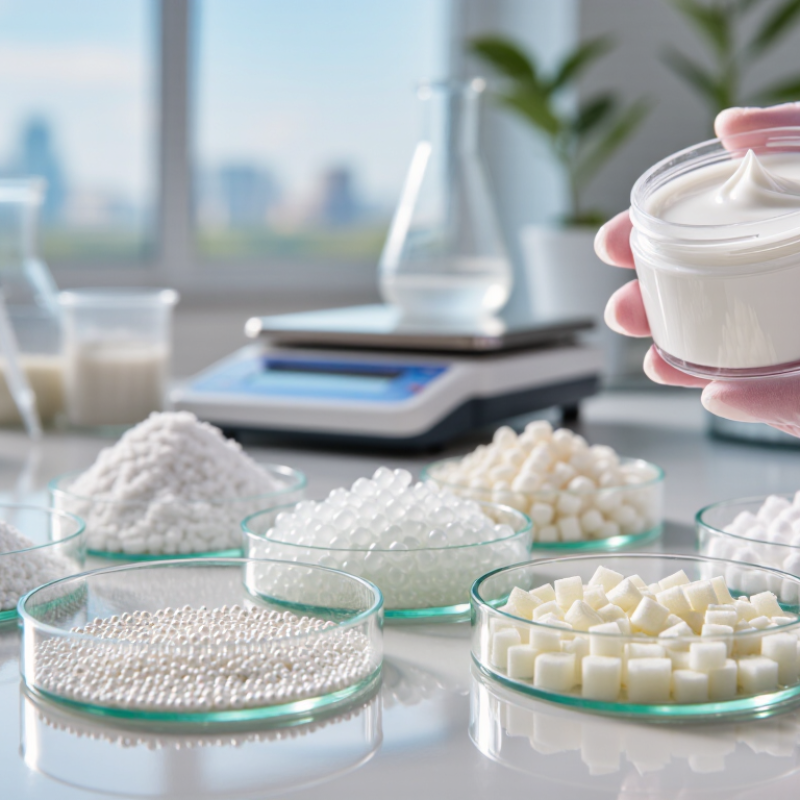
Why China Top Brands Reject Microplastic Texturizers?

Microplastic Texturizers: The Commonly Used <5 mm Size Threshold

Microplastic Texturizers: The Commonly Used <5 mm Size Threshold

The 5 mm cutoff is a practical reference, not a safety line. It describes particles smaller than a pencil eraser, including fragments and intentionally added beads. In product discussions, “microplastic” can therefore cover materials with very different shapes, compositions, and uses. Size alone does not explain how a particle behaves in water or whether it persists.

For formulators, that distinction matters. A texturizer might give a scrub a crisp feel or help a coating spread evenly, yet its small particle size can raise questions about release and removal. Testing should examine the finished product, not just the raw ingredient: how particles disperse, whether they escape during rinsing, and what treatment systems can capture. Results vary. They deserve careful interpretation.

Some companies are moving away from plastic-based texturizers because consumers expect simpler ingredient choices and product teams want fewer environmental uncertainties. Alternatives such as mineral powders or plant-derived particles can work, but they are not automatic substitutes. They may feel different, settle in the package, or need more testing. The <5 mm threshold is a useful starting point, though it cannot replace ingredient-specific evidence. A neat cutoff can make a messy question look simpler than it is.

China’s Microbead Phase-Out: 2020 Production and 2022 Sales Deadlines

China’s microbead phase-out changed how cosmetic formulas were developed. Under the national timetable, production of certain plastic microbeads ended in 2020. Existing products faced a sales deadline in 2022. This schedule gave manufacturers time to reformulate, but not unlimited time.

Microplastic texturizers once offered predictable scrub feel and low production costs. However, they could pass through wastewater systems and accumulate in aquatic environments. Large manufacturers now examine particle size, polymer type, rinse-off use, and wastewater behavior. Regulatory teams also check supplier declarations and batch records. Small details matter.

In formulation reviews, replacing beads is rarely a simple one-for-one switch. Mineral particles, cellulose, and biodegradable powders can change color, friction, foam, and stability. Some alternatives feel too sharp. Others soften during storage. The transition was not perfectly smooth, and early testing sometimes focused too heavily on texture.

The 2022 sales deadline increased pressure across warehouses and retail channels. Products made before the production cutoff still required careful inventory control. Clear documentation became as important as a pleasant skin feel. Yet one question remains useful: does a smoother formula truly justify a persistent material?

Why China Top Brands Reject Microplastic Texturizers? — China’s Microbead Phase-Out: 2020 Production and 2022 Sales Deadlines
Regulatory Date Milestone Covered Product Scope Key Requirement Market and Compliance Implication
16 January 2020 National plastic-pollution control policy issued Daily chemical products containing plastic microbeads, including relevant rinse-off personal-care products China established a phase-out framework for the production and sale of covered products containing plastic microbeads. Manufacturers and formulators needed to identify microplastic texturizers and begin reformulation, supplier review, and inventory planning.
31 December 2020 Production deadline Covered daily chemical products containing plastic microbeads Production of covered products containing plastic microbeads was required to end by the close of 2020. Production phase-out completed
New domestic manufacturing of covered formulations should no longer rely on plastic microbead texturizers.
2021–2022 Transition and inventory period Existing products manufactured before the production deadline Businesses had to manage remaining inventory while replacing microbeads with compliant non-plastic alternatives. Formulation testing typically focused on sensory profile, exfoliation performance, biodegradability, particle safety, supply continuity, and labeling review.
31 December 2022 Sales deadline Covered daily chemical products containing plastic microbeads sold in China Sale of covered products containing plastic microbeads was required to end by the close of 2022. Sales phase-out completed
Retailers, distributors, importers, and sellers needed to remove non-compliant stock from the China market.
Post-2022 Ongoing compliance expectation New and imported products within the covered categories Product developers must verify ingredient composition and avoid intentionally added plastic microbeads in covered formulations. Natural mineral particles, cellulose-based particles, starch-based materials, and other suitable non-plastic texturizers may be evaluated as alternatives, subject to product safety and applicable standards.
Data basis: China’s 2020 national policy on strengthening plastic-pollution control and its phase-out schedule for daily chemical products containing plastic microbeads. The deadlines are stated as 31 December 2020 for production and 31 December 2022 for sales. The phase-out does not represent a blanket prohibition on every plastic material used in every product category.

European Commission: REACH Could Prevent 500,000 Tonnes in 20 Years

Why China Top Brands Reject Microplastic Texturizers?

More Chinese personal-care manufacturers are reviewing microplastic texturizers in creams, cleansers, and color cosmetics. The decision is not only about product image. It reflects changing environmental expectations and tighter ingredient screening. The European Commission has stated that REACH measures could prevent about 500,000 tonnes of microplastic releases over 20 years. That figure gives procurement teams a practical reason to act. It also encourages formulators to test alternatives before regulations create urgent deadlines. Texture still matters. A cream must spread evenly, feel smooth, and remain stable during storage.

Tips: Ask suppliers for clear particle definitions, testing methods, and updated technical files. Check rinse-off and leave-on formulas separately. Compare sensory performance after heat and freeze-thaw tests. Do not accept vague “eco-friendly” claims without evidence.

The replacement process is not perfectly smooth. Natural powders may feel rough, while some biodegradable particles can affect viscosity or color. In my formulation experience, small dosage changes can alter slip within days of stability testing. Lab screening should include particle size, biodegradation data, impurity controls, and wastewater behavior. Independent testing adds confidence, especially when supplier data is incomplete. Teams should also record why each material was selected. This makes future reviews more reliable. Yet one question remains difficult: does a safer ingredient perform well throughout its full product life? That answer requires better data, not louder marketing.

Why China Top Brands Reject Microplastic Texturizers?

The European Commission estimates that REACH restrictions could prevent 500,000 tonnes of microplastic pollution over 20 years.

The annual figure is a simple average derived from the 20-year total, not a year-by-year forecast. The estimate describes potential pollution prevention, not a measured outcome or evidence about individual brands’ decisions.

EU Cosmetics Timeline: Rinse-Off Products Face a 2027 Transition Deadline

EU Cosmetics Timeline: Rinse-Off Products Face a 2027 Transition Deadline

For rinse-off cosmetics, 17 October 2027 is a key date. Under Commission Regulation (EU) 2023/2055, products containing restricted synthetic polymer microparticles generally cannot be placed on the EU market after that date. The rule covers more than visible exfoliating beads; some small polymer particles used for texture or appearance may also qualify. The details depend on the material and its use. Check the regulation’s definitions rather than relying on a supplier’s broad “microplastic-free” claim.

The transition gives manufacturers time to reformulate, but not much room for guesswork. ECHA’s 2019 restriction assessment estimated that around 42,000 tonnes of intentionally added microplastics entered the EU and EEA environment each year across the uses it assessed. That figure is not a cosmetics-only estimate, but it shows why ingredient review matters. A formula can look unchanged in a clear pump bottle and still need careful particle-level assessment. Small details count.

Tips: Map rinse-off formulas now. Ask suppliers for polymer identity, particle dimensions, and supporting documents. Test alternatives for rinse feel, stability, and shelf life. Keep records. One honest complication: substitutes may change a product’s texture, and the first trial may not work. That is a reason to start early, not to assume every replacement performs the same.

Reformulation Choices: Comparing Mineral, Cellulose, and Starch Texturizers

Replacing a microplastic texturizer is rarely a one-for-one swap. Mineral, cellulose, and starch options each change a formula’s feel, stability, and processing needs. The right choice depends on the product and the sensory effect it needs to deliver.

Mineral texturizers, such as certain clays or silica, can add body and reduce shine. They may feel dry or draggy on skin, so test the finish at different use levels. Cellulose-derived materials can create smooth, creamy textures and help suspend particles. Their performance can shift with water content and mixing conditions. Starch-based texturizers often give a soft, powdery feel, but heat and storage may affect viscosity. None is a perfect substitute. That is worth admitting.

Tips: Compare samples side by side at the same concentration. Check texture after mixing, then again after several weeks. A small lab batch can reveal clumping, settling, or an unexpectedly tacky finish. Record ingredient levels and process conditions; otherwise, results are hard to repeat. If the first trial feels wrong, adjust gradually rather than changing several ingredients at once.

FAQS

What were China’s microbead phase-out deadlines?

Production of certain plastic microbeads ended in 2020. Existing products faced a sales deadline in 2022. Inventory records mattered.

Which EU date matters for rinse-off cosmetics?

October 17, 2027, is a key transition date. Restricted synthetic polymer microparticles generally cannot be placed on the EU market after then. Check the exact definitions.

Does the EU restriction cover only visible scrub beads?

No. Some small polymer particles used for texture or appearance may qualify. A clear-looking cleanser can still need particle-level review.

What information should manufacturers request from suppliers?

Ask for polymer identity, particle dimensions, testing methods, and supporting documents. Keep batch records. Vague claims are not enough.

Can mineral or biodegradable powders replace beads directly?

Not always. They may feel rough, soften during storage, or change color, foam, and viscosity. One-for-one swaps can disappoint.

How should teams test replacement ingredients?

Compare rinse feel and stability. Include heat and freeze-thaw tests, shelf-life checks, particle size, biodegradation data, and impurity controls. Test carefully.

What does the cited 42,000-tonne estimate mean?

It estimated annual releases across uses assessed in the EU and EEA. It was not a cosmetics-only figure.

Why should reformulation begin early?

Alternatives may need several trials before texture and stability work together. Early reviews leave time to adjust. The first test may fail.

Conclusion

Microplastic texturizers are commonly defined by a particle size below 5 mm, but their persistence and difficult removal have made them an increasing concern in cosmetics. China introduced a phased approach, ending the production of certain microbeads in 2020 and their sale in 2022. In Europe, REACH measures are projected to prevent approximately 500,000 tonnes of plastic pollution over 20 years, while rinse-off cosmetic products face a transition deadline in 2027.

This regulatory direction also reflects changing consumer expectations and explains why do sustainable cosmetic brands reject microplastic texturizers. Instead of relying on persistent synthetic particles, formulators are exploring mineral, cellulose, and starch-based alternatives. Each option offers different benefits in texture, exfoliation, sensory performance, biodegradability, and formulation compatibility. Choosing the right substitute requires balancing product effectiveness with environmental responsibility, manufacturing feasibility, and evolving sustainability standards.

Ethan

Ethan

Ethan is a seasoned marketing professional with a deep expertise in our company's innovative product line. With a passion for sharing knowledge and insights, he takes the lead in regularly updating our corporate blog, where he explores industry trends, product features, and effective marketing......